

Andrea & Bertolt Mohr – „Rheinwärts“ (Towards the Rhine)
7 November 2026 to 17 January 2027
Museum Kaiserswerth shows „Rheinwärts“ by Andrea and Bertolt Mohr, 7 November 2026 to 17 January 2027. Opening Friday, 6 November 2026, 7 pm.
Museum Kaiserswerth, Fliednerstraße 32, Düsseldorf: local history with a 6 × 4 m clay model of the fortified town, plus art exhibitions. Free entry.


The Museum Kaiserswerth houses a permanent exhibition on the history of Kaiserswerth. It is run by the Heimat- und Bürgerverein Kaiserswerth e. V. (Kaiserswerth Local History and Citizens' Association).
Temporary exhibitions are held at the museum on a regular basis. They focus on artists or art with a connection to the north of Düsseldorf.
Everyone is very welcome to visit the exhibitions. Membership of the association is not required.
Museum Kaiserswerth
Fliednerstraße 32
40489 Düsseldorf
The museum is located in the historic centre of Kaiserswerth, in the east wing of the Kaiserswerth primary school (Grundschule Kaiserswerth).
The museum is open at weekends whenever a temporary exhibition is on show:
Saturdays 2 – 5 pm
Sundays and public holidays 11 am – 5 pm
Whether the museum is currently open, i.e. whether a temporary exhibition is on show at the moment, can be found under News.
Admission is free.
You will find a donation box at the exit. We are grateful for a small contribution.
The Museum Kaiserswerth has already shown exhibitions on many important artists who engaged with Kaiserswerth and the north of Düsseldorf. Retrospectives have featured, for example, works by Wilhelm Degode, Cornelis de Waal, Hans Vitz, Fritz Köhler and Adolf de Haer.
You can find information on past exhibitions in our archive.
Was Kaiserswerth once an island?
What does the Kaiserswerth coat of arms look like?
What connects Emperor Barbarossa, Friedrich von Spee, Theodor Fliedner or Florence Nightingale with Kaiserswerth?
Which district of today's Düsseldorf is the oldest?
Discover something new about Kaiserswerth!
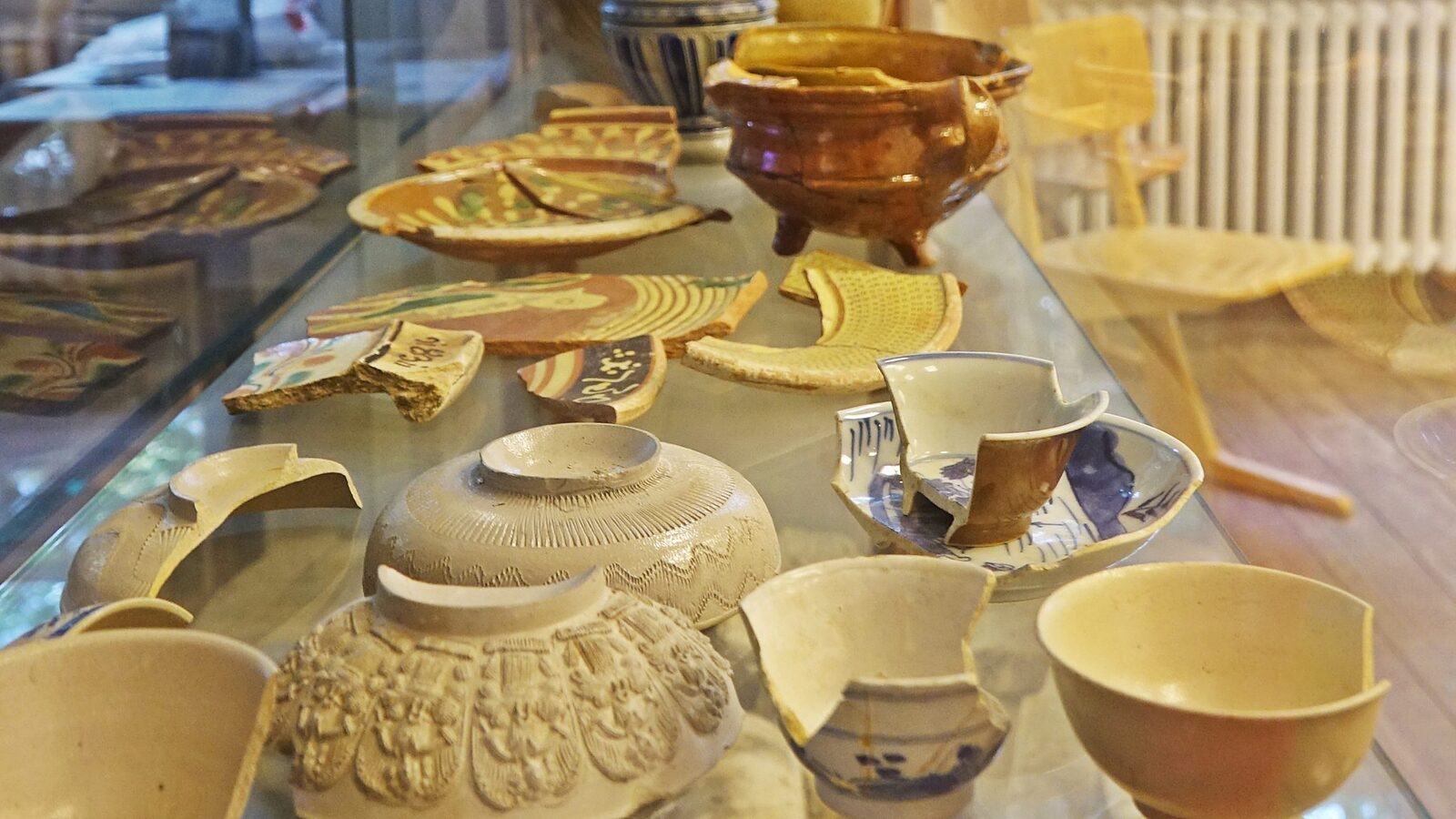
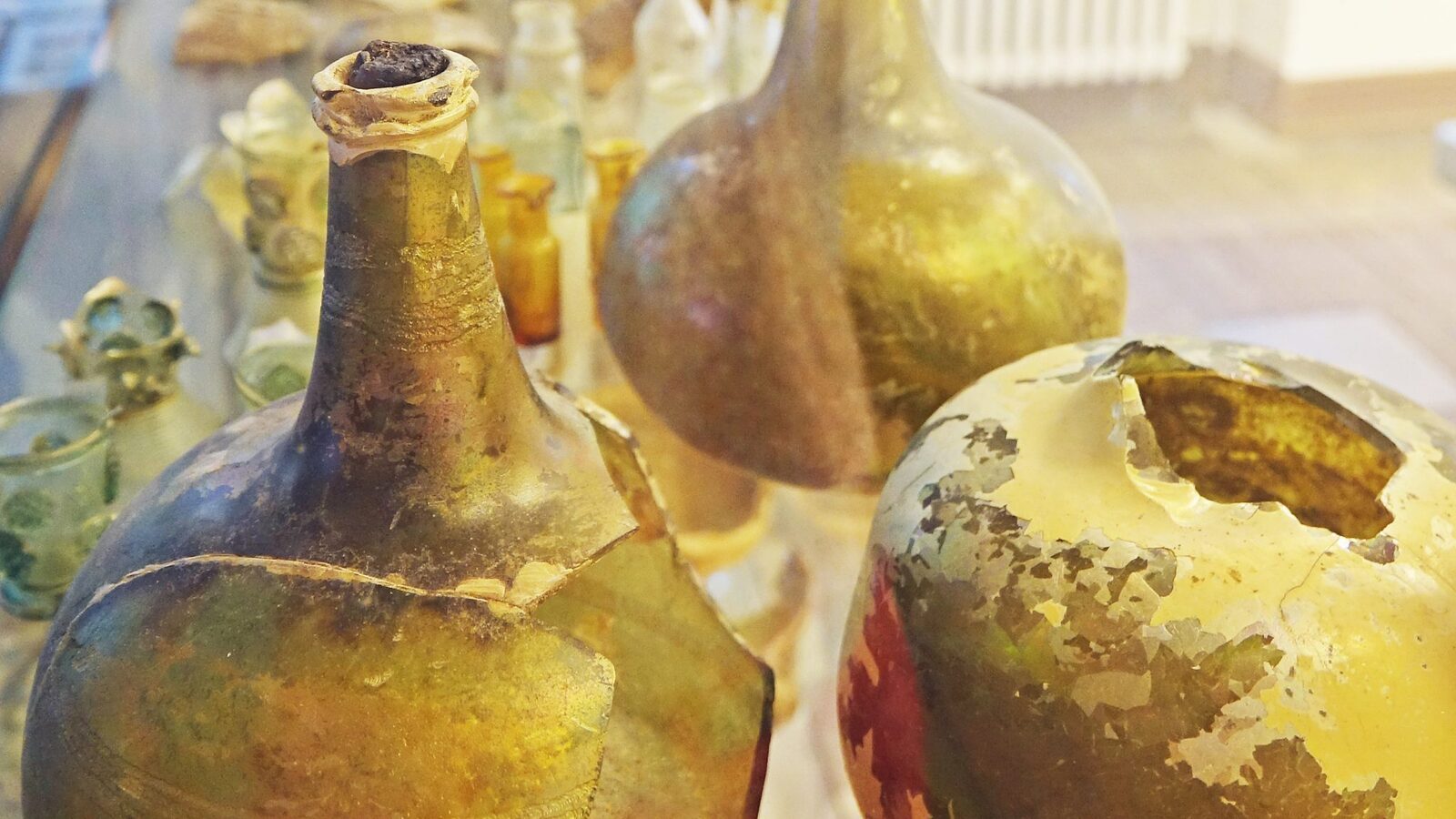
The permanent exhibition shows objects relating to the history of Kaiserswerth.
The history of the town with its collegiate foundation and imperial palace (Kaiserpfalz) is presented on display panels. Archaeological finds are exhibited in several display cases.
The museum holds a collection of paintings, prints, sculptures and documents by Kaiserswerth artists, as well as a small library of specialist literature on the history of the district and on its artists.
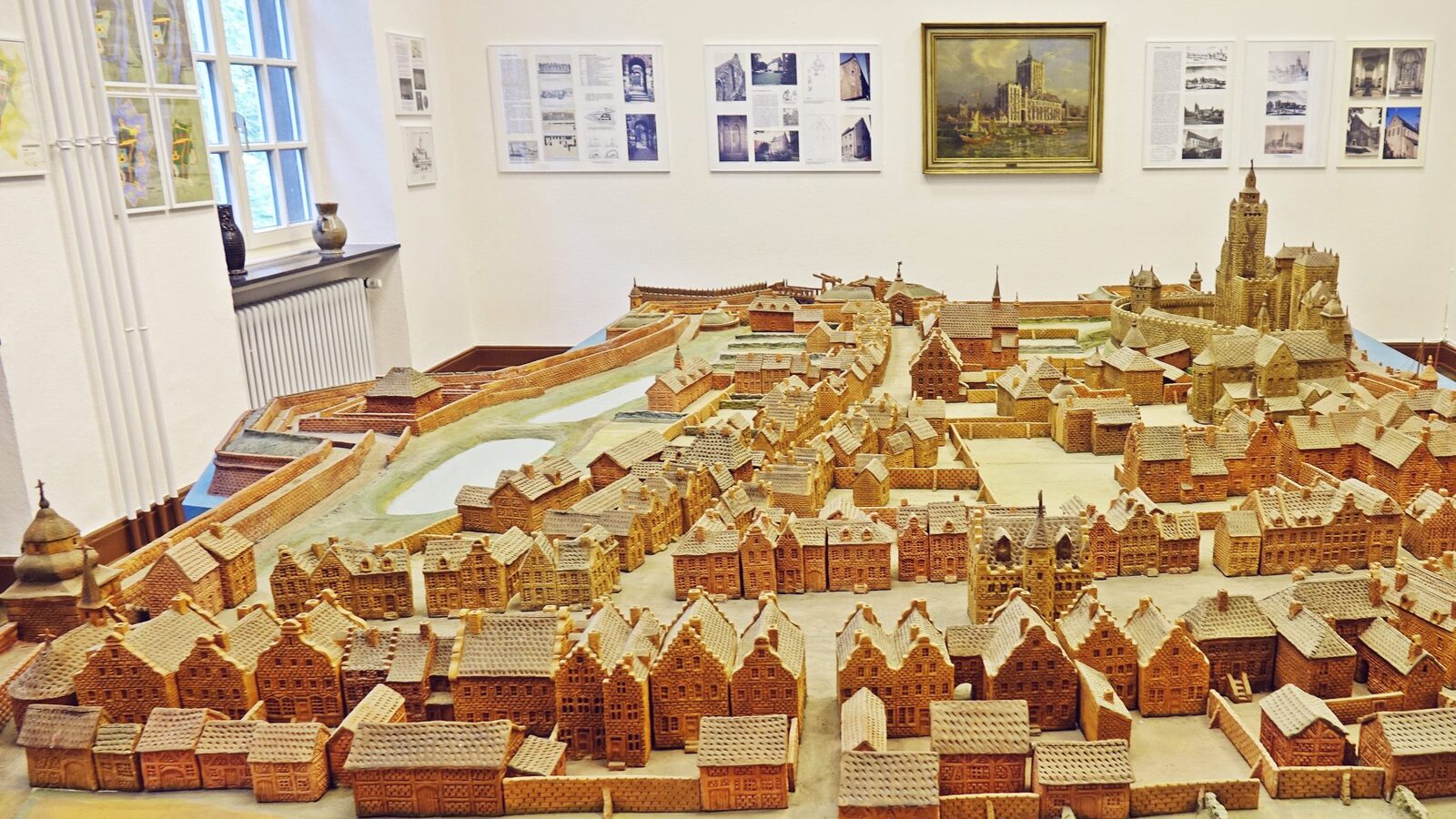
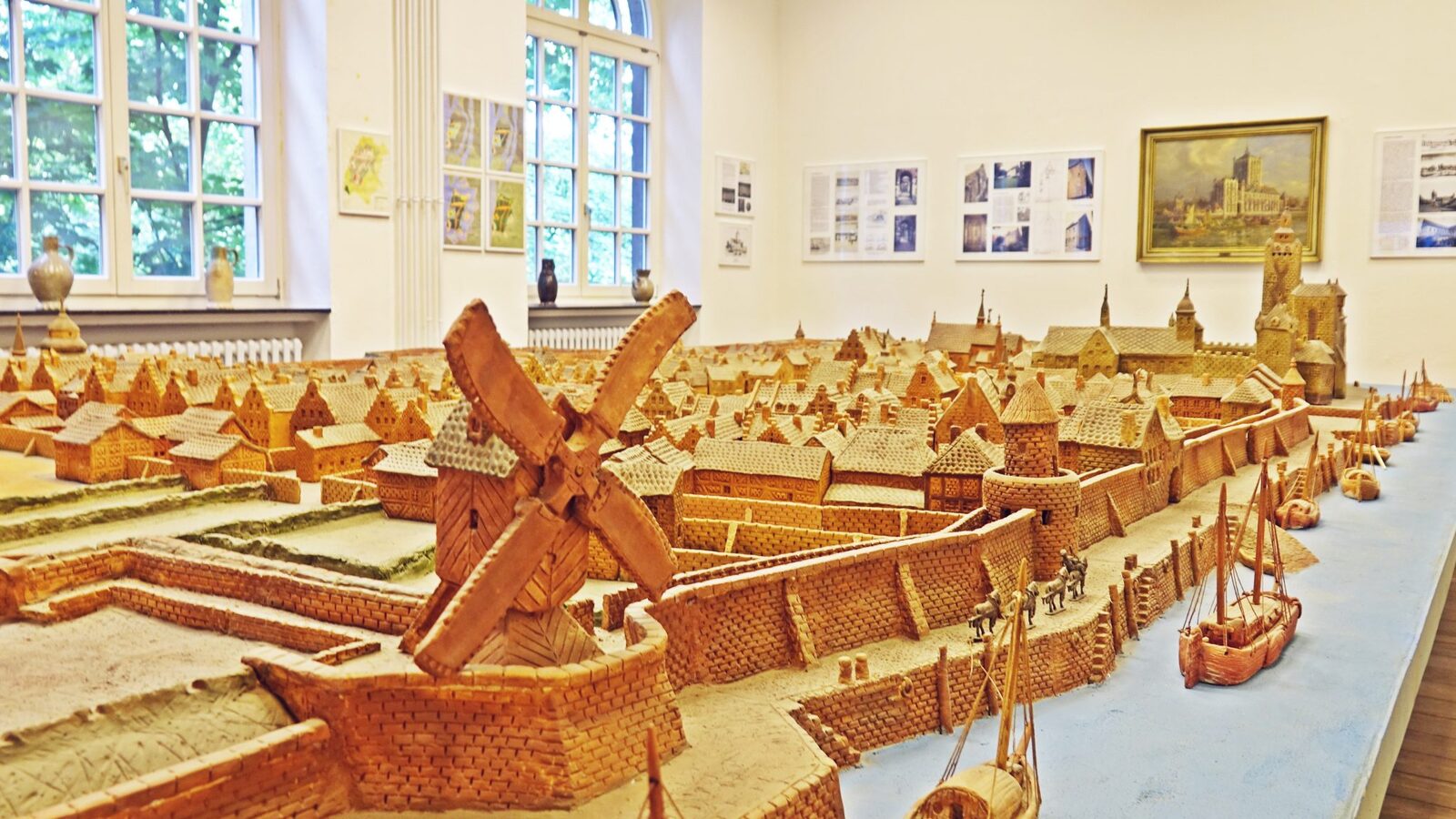
The centrepiece of the permanent exhibition is a large model of the medieval town made of fired clay.
The town model, measuring 6 by 4 metres, shows the appearance of the fortified town with its bastions and ravelins and its buildings as they looked until their destruction in 1702.
The Kaiserswerth painter, sculptor and ceramicist Hannes Esser created it in the 1980s over two years of work.
Maps, plans and contemporary prints complement the model.
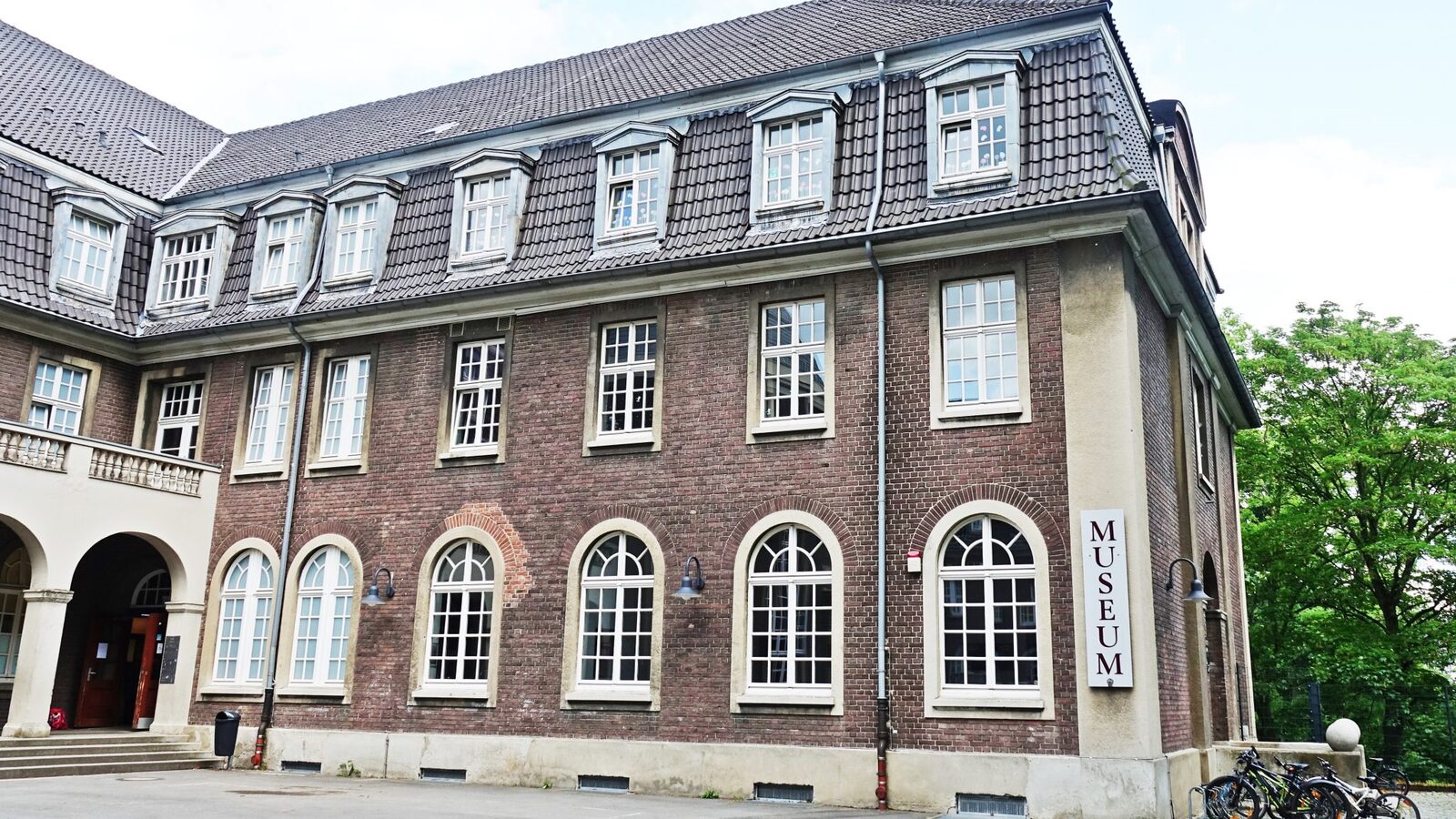
The museum is located in the historic centre of Kaiserswerth, in the east wing of the Kaiserswerth primary school.
In 1984, plans for a museum on the history of Kaiserswerth, dating back to the 1950s, were finally realised.
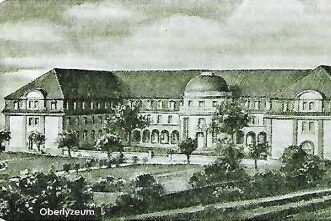
Since 1991, the museum has been housed in a former school building, the old girls' secondary school (Lyzeum) of 1914.
The training of women teachers for various types of school has a long tradition in Kaiserswerth, because Pastor Theodor Fliedner (1800 – 1864) was not only a reformer of nursing but also a pioneer of the kindergarten movement. To get the unsupervised children of female factory workers off the streets, he founded kindergartens in Düsseldorf and Kaiserswerth and made sure they had qualified staff.
As early as 1836, in the so-called Old Seminary in Fliednerstraße (today the Fliednerhof), he began training "Kleinkinderlehrerinnen" (infant teachers), as kindergarten teachers were called at the time. Courses for elementary school teachers and for teachers at higher girls' schools soon followed. In 1908, a reform led to the name "Oberlyzeum" for the institution training the latter type of teacher. The course of study was extended from three to four years. The Old Seminary therefore became too small, and a new building was unavoidable.
With the purchase of the site, the closed-down "Kaisergarten" restaurant on the St. Suitbertus bastion of the fortifications, excavation work was able to begin in August 1912. On 15 May 1913, the foundation stone of today's school building was laid. The poor building ground on the old fortification rampart required strong concrete foundations.
Nevertheless, construction progressed so quickly that the building was able to open in October 1914. The outbreak of the First World War in August only allowed for a modest inauguration ceremony. The new building had specialist rooms for the natural sciences and an assembly hall. Its inscription "Einer ist euer Meister, Christus" ("One is your Master, even Christ") can still be seen today. The attic rooms served as a boarding house for the trainee teachers.
A further reform of teacher training required a university education from the mid-1920s onwards. In 1928, the last year group of trained women teachers left the building, which from then on served to prepare girls for the general university entrance qualification.
After the Second World War, a wide variety of uses followed. In 1953, the grammar-school branch passed to the regional Protestant church, which continued it in a new building under the name Theodor-Fliedner-Gymnasium. It was followed by the technical college for social pedagogy and other institutions of the Kaiserswerther Diakonie. In autumn 1967, the Barbarossa primary school of the Kaiserswerther Diakonie moved from Friedrich-von-Spee-Straße into the former Oberlyzeum. In September 1982, it merged with the Catholic primary school to form a municipal school, and the building also passed to the City of Düsseldorf.
7 November 2026 to 17 January 2027
Museum Kaiserswerth shows „Rheinwärts“ by Andrea and Bertolt Mohr, 7 November 2026 to 17 January 2027. Opening Friday, 6 November 2026, 7 pm.
1 August 2026 to 27 September 2026
Museum Kaiserswerth shows „Berühre mein Herz“ by Krefeld artist Patrizia Casagranda, 1 August to 27 September 2026. Opening Friday, 31 July 2026, 7 pm.
20 June 2026 to 12 July 2026
Museum Kaiserswerth celebrates 40 years of the Klemensviertel: exhibition 20 June to 12 July 2026, opening 20 June at 2 pm. Free admission.
27 March 2026 to 30 May 2026
Ulrike Zilly's exhibition „Kleine Brise“ at Museum Kaiserswerth, 28 March to 31 May 2026: oil paintings, portraits, drawings. Opening 27 March, 7 pm.


